En los círculos católicos en que me desenvuelvo, Tolkien es famoso.También lo es Chesterton, Graham Greene, Evelyn Waugh, Flannery O'Connor, Walker Percy, Michael O'brien y otros que no me vienen a la mente. Un día se me ocurrió buscar si había algún escritor, vivo o muerto, que escribiera en español y que se pudiera comparar con estos famosos escritores ya citados.
Buscando en el internet, me crucé con estos nombres:
Juan Manuel de Prada
Jesus Sanchez Adalid
Pablo D'Ors
Pero más interesante aún me encontré con este post De Etiqueta . En el post, pero sobre todo en la vivaz discusión en los comentarios comentan en la necesidad de la etiqueta escritor católico. Hay quienes opinan que una etiqueta es innecesaria y hasta indeseable. Pero la idea que me dio que pensar es que los grandes escritores Católicos (vamos a dejar la etiqueta intacta por el momento) han surgido en países o culturas donde el Catolicismo es minoria, donde la lucha por mantener la fe, por ir contra corriente ha sido una lucha ardua. Inglaterra, por ejemplo. En España, donde todos son católicos ( o eran porque hay quien dice que España no es ya católica), la etiqueta no tiene sentido. Entonces alguien dijo que hay que hacer una distinción entre un católico que escribe y un escritor católico.
Claro que la(s) pregunta(s) de rigor es, ¿qué define a un escritor católico? ¿son sus temas? ¿su cosmovisión? ¿el hecho de que sus personajes recen el rosario? ¿la forma de ver la vida? ¿la forma de ver el arte?
Y aún una pregunta más seria, si el mundo en que vivimos hoy en día no es católico, ni siquiera cristiano, ¿veremos un resurgimiento de autores católicos? ¿tendrán aquellos autores modernos que la posean el coraje de llevar su fe a corazón abierto?
Saturday, February 11, 2012
Thursday, February 2, 2012
Leyendo en Español: La Colmena por Camilo José Cela
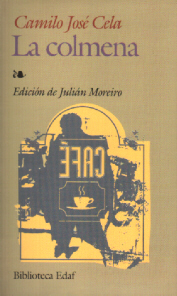
Es por eso que he decidido que este año voy a leer más en español. Claro que esta meta tiene mucho que ver con cierta compra que hice en octubre. Cada octubre una de las universidades locales tiene un venta de libros usados. Un verdadero paraíso para el lector. Paraíso? tentación es más preciso. Bueno, el caso es que en la mesa dedicada a lenguas extranjeras, en vez de los consabidos libros de texto, oh dicha!, había cerca de dos docenas de clásicos de la literatura española. Mi corazón se sentía un poco desbocado. ¿Qué podía yo hacer? ¿pasar la oportunidad? ¿dejar que esos libros terminen en una caja de reciclaje? NO! Así que en ese día de octubre (o era septiembre?), llegué a casa como la orgullosa poseedora de casi dos docenas de libros.
Pero como la emoción de la adquisición pasa rápido, no fue hasta hace una semana que decidí que este año, mis lecturas van a alternar entre lecturas en inglés y lecturas en español. Con eso en mente, comencé a leer mi primera selección: La Colmena, escrita por Camilo José Cela.
No se bien que me hizo escogerlo como mi primera selección de este mi año de español. Quizás fue que mi apellido de soltera es el primer nombre del autor; o quizás porque era el único libro que me sonaba de los que adquirí. Fuera cual fuera el motivo, La Colmena fue mi elección.
Cuando comencé a leer no estaba segura que me iba a gustar. La Colmena es un libro diferente. Mi primera impresión fue que, en vez de leer una novela, estaba viendo una película o documental, donde el director había decidido mover la cámara de manera rápida y sucesiva por una calle llena de gente. No hay tiempo para detenerse en ninguna de las personas que pasan por la calle, sino que sólo tenemos una sucesión de impresiones, observaciones. La novela no tiene trama o personaje principal. No tiene climax o descenlace. Sólo la sensación de que seguimos a un observador que se mueve rápidamente por una ciudad llena de gente, recogiendo impresiones o quizas tomando una muestra. Y la muestra es desesperanzadora. La gente parece desilusionada, triste. No hay dinero pero si hambre. No hay alegría sino tristeza, desesperación.
A pesar de lo dismal de la novela, no puede uno sino darse cuenta que está escrita de manera magistral. La Colmena tiene lugar durante el trascurso de tres días. Tres días en la vida de Madrid. Esta novela está llena de personajes (cerca de 300 leí por ahí). Los personajes, al principio, parecen desconectados pero, poco a poco, nos damos cuenta que hay diferente relaciones entre ellos. Me llenó de admiración como Cela pudo mantener, no, hilar, estas complejas relaciones de una manera estelar.
El año es 1942. Inmediatamente después de la guerra civil española y en medio de la segunda guerra mundial. Definitivamente un tiempo en la historia donde la alegría no abunda. Los personajes se mueven a traves de las horas de una manera triste, lenta, a veces como cerrados a la emoción.
Gracias a Dios la novela termina con un rayo de esperanza:
"La mañana, esa mañana eternamente repetida, juega un poco, sin embargo, a cambiar la faz de la ciudad..."Estoy segura que hay más profundidad en esta novela. De hecho, me fascinaría tenerla como selección para un club de lecturar. Definitivamente habría mucho que discutir. Mientras tanto como no soy crítica literaria, después de acabar la lectura me lancé al internet a buscar una buena guia de estudio o una buena crítica. Esto es lo que encontré:
Camilo José Cela biografía
Una buena guía de estudio
Una buena reseña en Goodreads
Algo más científico

Saturday, January 14, 2012
Lessons for the New Year or What St. Paul is Teaching Me

It seems that naturally, this time of the year, my gaze turns inwards as I reflect over the last year and make plans for the next. The problem with me is that my gaze falls first on the things I didn't do:
- the resolutions I didn't keep (I was going to be organized!)
- the exercise plan(s) that were abandoned (The 30 days shred that never got to 30 days)
- the health habits that never lasted more than a few weeks (kefir, chia seeds anyone?)
- the books that weren't read ( I was going to read more Spanish this year, right?)
- the relationships that weren't built (where are those dates with M?)
- the intellectual goals that weren't achieved (Oh Chesterton! this year we will meet!)
- the housekeeping plans that were simply forgotten (Motivated Moms? Flylady?)
Christians definitely look at the world differently.
The thing is that even goals not achieved, and resolutions not kept can be good things, if a lesson was learned, if I use it as a stepping stone. Furthermore, it is not the goals that are important or the resolutions,
Only let your manner of life be worthy of the Gospel of Christ...that you stand firm in one spirit,with one mind striving side by side for the Faith of the Gospel, and not be frightened in anything by your opponents... for it has been granted to you that for the sake of Christ, you should not only believe in him, but suffer for his sake. (Phil. 1:27-28a, 29)
I don't like to suffer, I don't like when life is hard. I consider a good year the one with more occasions for joy than for sorrow. But, is it always true? I tend to want to run from painful situations, to avoid pain at all costs, to fast-forward through difficult moments to get to the good ones. Again, it is a matter of perspective. Isn't the life of a Christian to live in Christ, as Christ? Isn't it true that the moments when I am closer to God are the difficult ones, the ones that hurt, the ones where every fiber of my being wants to scream: STOP, let me off!? Isn't in those difficult moments I run to the One that can help? I don't know if I can say that, whatever happens to me that can be labeled as suffering, is for the sake of Christ but, if I can see the hard moments as a stepping stone to something better, as tool for growth, then I have a powerful weapon against my greatest enemy: fear!
Fear can't have a hold of me if I stand firm on the believe that all situations: good or bad, sad or joyful, can lead me closer to God and the life he intends for me.
St. Paul also makes another point-maybe more relevant to new year's beginnings:
"I press on... forgetting what lies behind and straining forward to what lies ahead"As I read this, I thought of St. Paul's life. He had persecuted Christians. Who knows what harm he caused them! He could've lived his life with a paralyzing grief, full of remorse and regrets; but, he trusted in the redemption he had received, the forgiveness that was his, and pressed on, his eyes fixed on the goal and not on the mistakes. Another lesson from St. Paul: dwelling on what we didn't accomplish or what we didn't do or in what we did wrong is not good. Of course, we take stock. How can we press on if we don't look at where we are coming from? But there are different ways of looking back: I can look back just as an exercise to help me figure out where am I going or, I can look back and dwell on the negative. The latter is worthless!
St.Paul continues,
"I press on toward the goal... let those of us who are mature be thus minded, and if anything you are otherwise minded, God will reveal that also to you. Only let us hold true what we have attained." (Phil 3)It is, then, a sign of maturity to let go of regrets, remorse, errors. And hold on to what we have attained. Again, a matter of perspective: in looking back, focus on what have been gained. There is always something we have attained, even if only experience.
And then St. Paul offers a perspective that I want to embrace for this coming year:
"Finally brethren, whatever is true, whatever is honorable, whatever is just, whatever is lovely, whatever is gracious, if there is any excellence, if there is anything worthy of praise, think about that"
This year I want to look at life this way, focusing on what is honorable, lovely, just, true. Not in a pollyanish way but, in a conscious way: choosing to see the lovely not the ugly, the true not the lie, the excellent not the mediocre, and especially that which deserves praise rather than what deserves criticism.
As if this wasn't enough, this reading of St. Paul's letter to the Philippians, gave me another guideline for this year: to learn to be content.
"I have learned, in whatever state I am to be content. I know how to be abased and I know how to abound; in any and all circumstances, I have learned the secret of facing plenty and hunger, abundance and want. I can do all things in him who strengthens me."In summary, St. Paul is teaching me to:
- focus on the manner I live my life
- be not afraid!
- look at the past just as a guideline, not dwelling on what I haven't accomplish
- press on, strain forward
- think of what is good, honorable...
- praise don't criticize
- learn to be content
Sunday, December 4, 2011
Advent: Radically Reorienting Life. A beginning.

The image came to my mind, slowly taking form: there I was at what seem the end of a road, a wrong road. What person that realizes she is walking along the wrong road doesn't turn around and start anew? Who would continue down the road that she knows is not getting her where she wants to go? Only an idiot!
The priest's voice crept into my thoughts again. He was talking about the reading from Isaiah:
A voice cries out:Prepare the way of the lord, make the road wider, smooth the rough spots, remove the the obstacles. Advent calls us to repentance, to change, to being again. The calendar year is drawing to a close but, the Church year has already begun. It starts with Advent's call to conversion, to radically reorient our lives. The Church in her wisdom knows that after the weeks of Ordinary Time we are ready for some change. The spiritual inroads of Lent and Easter have grown stale. Our old demons are back and our soul feels fatigued and disillusioned. We are struggling again. But the Church reminds us, reminds me:
In the desert prepare the way of the LORD!
Make straight in the wasteland a highway for our God!
Every valley shall be filled in,
every mountain and hill shall be made low;
the rugged land shall be made a plain,
the rough country, a broad valley.
Here is your God!
Here comes with power
the Lord GOD...
I need a change. I want a change. And this is a good time to start. For me, this message of change and conversion issued during Advent, is often lost in the fray of Christmas shopping. I don't hear the voice of John the Baptist inviting me to repent. I don't hear the invitation to conversion. All I hear is the voices in my brain reminding me that the house needs to be decorated, that the cookies need to be baked and the presents bought. A thousand and one voices, getting louder and louder, and crowding out the voice I need to be hearing.
I am glad for the time of quiet at mass when the words of the priest worked themselves through the funk, and made me hear and think. It is time for me to clean house, to de-clutter my brain, to focus on what is important. It seems that Advent should be the time of new resolutions.
It seems that I am setting myself up for failure. How can I de-clutter my brain at a time like this. Haven't you heard that there is a Christmas show to put on? Radical reorientation... Radical means from the root. And anything with the word radical in it can't be easy.
No matter. Just in case, I'll start small.
Today, on this Second Sunday in Advent, and because it is never too late, I want to make a new resolution: for the next couple of weeks, it doesn't matter how busy my schedule, how long my to do list, I am going to carve out a pocket of time to be with the Lord. The renewal of relationships begins with time spent together in conversation.
One of my favorite prayers from the Morning Prayer of the Liturgy of the Hours is this portion of the Canticle of Zechariah taken from the Gospel of Luke:
“In the tender compassion of our God, the dawn from on high shall break upon us, to shine on those who dwell in darkness and the shadow of death, and to guide our feet into the way of peace"This Christmas I want to experience the dawn from on high. And I don't want to miss it because my eyes are looking somewhere else.
Sunday, September 4, 2011
Llámenme Ignorante
Llámenme ignorante, pero yo pensaba que los taínos estaban extintos. Nunca se me había ocurrido pensar en el hecho de que están vivos en muchas de nuestras tradiciones (al menos en el campo) y sobre todo en nuestra lengua.
OK, yo sé que hay ciertas palabras taínas que sobreviven en nuestra lengua y que usamos con frequencia: Quisqueya, hamaca, barbacoa, etc. Sé también que el casabe es de origen taíno pero leyendo este artículo, escrito por el Doctor Pedro J. Ferbel he aprendido de la sobrevivencia de la cultura taína.
Claro que, como bien dice el artículo, aún cuando hay una al parecer indiscutible influencia taína en la vida dominicana; el dominicano no se identifica con el taíno. Y como va a hacerlo si siempre se nos ha dicho que los taínos están extintos.
Sería interesante hacer un estudio, o leerlo se ya alguien lo ha hecho, de la identidad del dominicano. Yes que a mi me parece que el dominicano tiene un problema de identidad. Lo cual no me sorprende porque con la sopa biológica que somos cómo saber quién somos.
OK, yo sé que hay ciertas palabras taínas que sobreviven en nuestra lengua y que usamos con frequencia: Quisqueya, hamaca, barbacoa, etc. Sé también que el casabe es de origen taíno pero leyendo este artículo, escrito por el Doctor Pedro J. Ferbel he aprendido de la sobrevivencia de la cultura taína.
Claro que, como bien dice el artículo, aún cuando hay una al parecer indiscutible influencia taína en la vida dominicana; el dominicano no se identifica con el taíno. Y como va a hacerlo si siempre se nos ha dicho que los taínos están extintos.
Sería interesante hacer un estudio, o leerlo se ya alguien lo ha hecho, de la identidad del dominicano. Yes que a mi me parece que el dominicano tiene un problema de identidad. Lo cual no me sorprende porque con la sopa biológica que somos cómo saber quién somos.
Monday, August 22, 2011
Habit #2: Maintain Key Friendships-from The 10 Habits of Happy Mothers by Dr. Meg Meeker.
Happy mothers know their value and happy mothers maintain key friendships. They know that loneliness is an enemy to be fought. They know they need other women and they don't apologize for it.
At a certain level we all know that friendships are important but, as Dr. Meeker says,
"The truth is, when something needs to be cut out in the crunch of daily demands, friends are the first to go. Sometimes friendship seems expendable, unnecessary. "Some of us might think that our needs are being met by our family and husbands,
"this is extremely important, but they don't fully satisfy our relational needs because the others in the relationship are too dissimilar from us. Husbands can't be everything to us and certainly children can't be."I am sure my dh is grateful that I have a group of women I meet regularly with! It is not that I keep him out of parts of my life. Far from it. It is that there are things proper to being a woman that he can't relate to. And I shouldn't expect him to. It goes without saying that my relationship to him is primary but he is not expected to be my all in all. I think he is relieved.
Loneliness can be a great enemy. It is in loneliness that our problems magnify: our thoughts get darker,our sorrows get deeper, our sadness consumes us, our joys go unshared and unseen. Loneliness is crushing. It is in loneliness when we start asking, "What is wrong with me?"
" A mother who feels lonely believes on some level that she is unlikable, even unlovable."Dr Meek reminds us that "friends are a necessity, not a luxury." I truly believe this. We are not meant to be alone. I am not meant to be alone. I read once in book about social development for children that kids don't need tons of friends. Just one friend can carry a child through the developmental years. Just one friend can make a difference between a normal childhood and miserable one. I think the same is true of us.
*For more discussion on The Ten Habits of Happy Mothers see Elizabeth Foss' blog . She is the one that got me interested in reading the book and she is doing a great job at discussing it every Thursday.*
Saturday, August 13, 2011
It WAS Hard to see her go
I thought it wouldn't be hard this time. I did it last May. I did it all. All of it, the crying, the sadness, the emptiness. The things left behind spoke of her absence. Loud. It was hard then but,I knew she will be back at the end of July. Now I don't know when the house will be filled with her joy, her presence.
It was hard to see her go.
It doesn't matter how much I tell myself:
-you will text (btw, I retract everything I said about texting)
-you will Skype (oh the blessedness of technology!)
-she will visit for holidays (would her work schedule permit her?)
-all mothers go through this (well, I am not all mothers)
-your mother went through that (yeah, but I was 25, not 18)
-it is the American way (well, I am not American)
It doesn't matter, it was still hard to see her go.
Part of me felt as it was not going to happen. When she got back, she fell right into our routine. She filled her space and our lives like always. It felt as if she had not gone at all. Maybe I dreamt it? My whole Dominican self hoped, maybe it is a dream.
But it wasn't a dream... This morning it was time to go. My whole Dominican self cried (inside) not yet! it is too soon! she is too young! this is not supposed to happen until you get married! But it did. This morning. In her new car.
 With her dad.

It doesn't matter how much I tell myself
- she is with people we love and trust.
- she is doing what she feels/discerned the Lord is calling her too.
Both these things are a great comfort but, it was still hard to see her go.
All our parenting career points to this moment. This is what we have prepared her for. Her quiver is full, or is it? We did our part, or did we? Nagging thoughts fill my mind: did we prepare her well?
Here again is a lesson in trust.Trust that we did our best, that we did it adequately, that we taught her the skills to supply what we did not teach; and most of all, that the Lord will supply what we might have lacked.
It was hard to see her go but, she was ready. She has been a caterpillar for a while and now she is ready to be a butterfly: beautiful, graceful, and free. She takes with her part of us, part of me.
Now, I look at my two boys left at home and I hug them a little tighter, look into their eyes a little more frequently, pay attention a little closer, savor the moments more earnestly. Some time, sooner that my mother's heart is ready for, it would be time to see them go. And it will be hard.
Monday, August 8, 2011
Any Homeschooling books lying around?
Need to make room for more books?
Have some homeschooling books you can't sell?
Like to read but don't want to spend a lot of money buying books?
Consider swapping your books at Paperback Swap!
 I had a bunch of books that I had try to sell on some homeschooling loops or boards with no luck. I decided, instead of donated them to a bazaar or Goodwill, to swap theml. At least I get some other books out of the deal! Today I mailed 20 books. Most of them were homeschooling book but there were some fiction books too. I get one credit for every book mailed. I can then use those credits to request other books.
 If you decide to do this here is a tip:
Don't do like a I did a post too many at a time! I have spent the whole morning wrapping books to mail.
Thursday, August 4, 2011
Acting as if I love God
In Mere Christianity C.S. Lewis says, " Do not waste time bothering wether you 'love' your neighbor, act as if you do." As soon as I read this line it reminded me of my relationship with God.
Do I love God? Does He love me? those questions have come to me time and time again. To reason God's love for me is not difficult. I can see it in creation. I can see it in the sacrifice of his Son. I can see it in the many details that form my daily life. But, do I love him? Do I return his love? I think my problem is, as Lewis puts it, I "cannot find such a feeling" in myself. I do not have strong feelings of love of God.
C.S Lewis says the answer is to "act as if you did." And I think,without thinking about it, that is what I have done. My choices, my preferences and priorities speak of love. It is not that I have always made perfect choices, or that my priorities are always in order, or that I always prefer that which is good. No, far from it. But, I try. And that counts. And God knows that I try. And that counts too.
Today, C.S Lewis reminds me that,
Christian love, either towards God or towards man, is an affair of the will. If we are trying to do His will we are obeying the commandment, 'Thou shalt love the Lord thy God.' He will give us feeling of love if He pleases. We cannot create them for ourselves, and we must not demand them as a right.But the great thing to remember is that, though my feelings come and go, His love for us does not.
St John Vianney, whose feast day we celebrate today, has a good advice, " your hearts are small, but prayer stretches them and makes them capable of loving God."
I intend to follow it.
Saturday, July 30, 2011
The Ten Habits of Happy Mothers-Habit #1 Understand your Value as a Mother
I have heard that society doesn't value mothers.
I have heard that women don't value motherhood.
I have heard that people look down on stay at home moms.
Yet, I don't know where the accusers are. All my mothering life has been surrounded by women who either stayed at home, longed to stay home, or who had stayed home. Maybe I have lived under a rock. I don't know.
All I can say is that my battles have all been fought with myself and within myself. It is not other people who have laid obstacles in my path. It is I, who has had trouble with being just a mom. Just a mom wasn't part of my experience growing up. My mother is an excellent mother and she always had a career. Always busy, she owned her own pharmacy and taught Chemistry at the university.
I don't remember feeling neglected.
I don't remember feeling she was absent.
I don't remember seeing her torn between two worlds.
I don't remember angst on her part.
I think I knew she was a mother with a career.
And I knew that we came first.
What is different for me? For one thing, she wasn't expected to do it all. She didn't do it all. She had maids to do the cooking, the cleaning, the laundry, the gardening, and, the minding of children. When she was home, she was home. She managed to be present even when she was absent. She was always reachable. She was always mom.
I have never talked to her about this. I don't know why she worked. I know that making ends meet in the Dominican Republic is difficult with only one salary. But it never occurred to me to ask her if she worked because she needed it, because it fulfilled her, because it was what was expected of her. I don't even now if she posed those questions to herself. I don't even know if she valued herself as a mother. I don't know if it is a question that she would've asked. Someday soon I am going to ask her.
It never crossed my mind that I will stay at home. Enter the United States and the daycare world and, I had to ask myself some hard questions, the main of which was, Did I want my children to be raised by others? The answer was NO. I wasn't pressured into this decision. It was made in freedom. My husband, who wanted me to stay home- I know- would have accepted my decision, had I wanted to work. So, I can't say that my doubts have come from a forced decision.
And yet, there have been doubts. Nobody has looked scornfully at me and, asked "Don't you know that these days women do not stay home?" "Have you heard? we are in the 21st century." It is I who have asked those questions. It is I, who have wondered, "Would I make it in the real world?" "Do I have anything to offer?" "Am I good at anything?". It is I, who have watched successful women and wondered, "what does it feel like to be be good at something and know it, and know that the world knows that I am good?"
In her book 10 Habits of Happy Mothers, Dr Meg Meeker reminds me of my value as a mother.
"If we could wrap our mind around our true value as a woman and a mother, our life will never be the same."Our value doesn't come measured in salaries or talents or gifts. Our value comes from something simpler: we are needed and loved. We can do for our children what nobody can. I can love, nurture, comfort, feed, guide, train, my children like nobody can. I matter to them. I matter because I am me, their mother. There is a unique bond between us just by the simple fact that I am their mother. All I do extra, builds and strengthen that bond. I don't have to woo my children to love me. I don't have to perform to earn their love.
It is so simple and I make it so complicated.
I don't struggle with my decision anymore. I don't question it. I wouldn't have it any other way. I still wonder, though, if I have anything to offer to the world at large. Is there a place for me beyond the boundaries of my family? Is there something I can contribute? Dr Meeker reminds me that,
"In addition to fulfilling our purpose as good moms, we were born to do more, in time"What I have to regain is not my self. I think that throughout my career as a mother I have kept a healthy sense of self. I don't feel guilty having a life separate from my kids. Never have. What I have to regain is my trust in the Lord. Trust that, in time, I will discover what lies ahead. I will discover what He wants me to do next. Trust that life is not over at 50. Trust and put to the wondering to rest. Concentrate in living my life now.
I think it is about attitude. Dr Meeker says, "love the life you are supposed to be living and you happen on fulfilling the deep meaning of your life. It works. The energy comes, you get bolder, and you live less fearfully."
The deep meaning of my life is not a hidden treasure in the future, it is the here and now.
Monday, July 11, 2011
Summer Reading Notes
What I have been reading of late:
- Vile Bodies by Evelyn Waugh: Laugh aloud funny satire of British society of the 1920s. I had only read Brideshead Revisited by Waugh. A very different book. I was glad to be introduced to this side of Waugh. It made me want to read more by him.
- Memento Mori by Muriel Spark : I think I saw this book mentioned on Melissa Wiley's blog . Muriel Spark was a convert to Catholicism. I had seen her pop up several times in other blogs about Catholic writers. I wanted to read something by her. After finishing Memento Mori, I realized I had read another book by her,The Prime of Miss Jean Brodie, which I didn't like at all. Mercifully, I didn't remember, because maybe it would've kept me from reading MM. In one of those serendipitous reading acts, MM was a great follow up to Vile Bodies. Both were British, both were satirical, both were funny, both had a depth behind the comical.
- Mere Christianity by C. S. Lewis: I have to confess I am not a big fan of Lewis. I know that is probably heretical to most but, it is the truth. Thankfully, Mere Christianity is different. I have been meeting weekly with some ladies to discuss this book. There is so much to talk about! I am not finished with this yet and I wish I had started blogging about it. It would make it stick better.
- Crooked Adam by D.E. Stevenson: Satisfying, is the word for this read. A good old fashioned spy story, Crooked Adam (if I remember correctly) was published during WWII. It is fast paced and keeps your interested. A great summer reading! (Recommended by A Library is a Hospital for the Mind ).
- Mansfield Park by Jane Austen: I listened to this from Librivox. Books on this site are read by volunteers, not professionals, so the quality of the reader varies. That was certainly true of the reader of MP, some where very good and some, not so much. But, hey! it is free. I am not complaining. I enjoyed MP immensely. It was a great companion while cooking, cleaning or folding clothes. (note: the 1999 is awful. Nothing like the book!)
- Before Pentecost, I picked up John Paul II encyclical on the Holy Spirit (Dominum et Vivificantem). It is a challenging reading but so worthwhile. I am three quarters into it and planning on re-reading so I can write about. It would be a great way of digesting the information.
- No Country for Old Men by Cormac McCarthy: Violent, violent! It was like watching a Clint Eastwood movie. The first 100 pages I wasn't sure I was going to finish it but, it kept me going. This is one of those books that you need to have somebody to talk about it with. So, I gave it to M. to read.
- Simply from Scratch by Alicia Bessette: Just OK. Nothing great. It is her first novel and somehow it felt too formulaic, to cliché, kind of like a chick flick between too covers.It wasn't bad but it is forgettable.
- Son of Charlemagne by Barbara Willard (with the kids): we are not completely finished with this one. Good story and it has created some rabbit trails. It had us searching all over the net about Charlemagne and his family. It also led us into a search for information on the Saxons and this, in turn, took us to the Vikings.
- Yesterday, I began Vanishing Act by Jodi Picault. Not much to report on this one yet. But it promises to be intense as any other Jodi Picault book I have read before.
- After Mansfield Park, I decided to give the Itunes U a try. I have been listening to some lectures on European Civilization from the 17oos to 1945. It is an interesting course. The lecturer, John Merriman, manages to pull some interesting lectures, even though he has this annoying stammering habit, and he curses and, he has a somewhat dislike of the Catholic Church. Even with all those strikes against him, I am still enjoying the class.
Saturday, January 1, 2011
Emilia Pardo Bazan
De vez en cuando pasa que el autor de una obra me fascina casi tanto como su obra. Este es el caso con Emilia Pardo Bazan la autora de Los Pazos de Ulloa. Indagando un poco acerca de ella me encuentro con una señora interesante. Una mujer con inteligencia y agallas,una mujer que supo superar las limitaciones impuestas a su sexo. Siempre he admirado a los autodidactas. Quizas es el "homeschooler" en mi pero, me gusta conocer la vida de aquellos que han tomado su educación en sus propias manos, aquellos que de manera metódica se lanzan a explorar los diversos campos del saber. La Condesa Pardo Bazan tenia una amplia gama de intereses. Todo le llamaba la atención: la ciencia, la politica, la filosofía, e incluso la cocina.
Buscando en el internet encontré varias cosas interesantes:
-En la Biblioteca Visual Cervantes encontré un documental acerca de su vida.
Luego de ver el documental se me ocurrió pensar ¿qué fue de los hijos de la condesa? Encontré este articulo que detalla el patrimonio de Emilia Pardo Bazan .Claro el artículo no responde mi verdadera pregunta ¿fue ella una buena madre? ¿prestó atención a sus hijos?
Aqui dejo un artículo que enfoca su feminismo.
Y aquí hay una biografía en Google Books,La Luz en la Batalla por Eva Acosta
Buscando en el internet encontré varias cosas interesantes:
-En la Biblioteca Visual Cervantes encontré un documental acerca de su vida.
Luego de ver el documental se me ocurrió pensar ¿qué fue de los hijos de la condesa? Encontré este articulo que detalla el patrimonio de Emilia Pardo Bazan .Claro el artículo no responde mi verdadera pregunta ¿fue ella una buena madre? ¿prestó atención a sus hijos?
Aqui dejo un artículo que enfoca su feminismo.
Y aquí hay una biografía en Google Books,La Luz en la Batalla por Eva Acosta
Los Pazos de Ulloa por Emilia Pardo Bazán
Impresiones
Los Pazos de Ulloa se trata de un sacerdote joven, acabado de salir del seminario, que ha sido asignado como capellán a los Pazos de Ulloa. Una casa noble que ha visto mejores años, donde la decadencia se nota por todas partes: en la casa, en la capilla y sobre todo en la gente. La gente embrutecida, empobrecida, sin religión aún cuando la religión los rodea. Julian, el capellán, se enfrenta con una serie de personajes que se enfrentan en una lucha entre el bien y el mal, la santidad y el pecado; y donde muchas veces es dificil saber quien ha ganado.
Esta novela española del Siglo XIX me recuerda, en cierto modo, a novelas como Cumbres Borrascosas o Rebeca: Novelas donde hay una presencia maligna que prevalece durante toda la novela. Esta presencia lleva la novela. Te mantiene en vilo, esperando el suceso que parece va a suceder a cada vuelta de página. Hay una continua sensación de tragedia inminente. Senti que la novela me envolvía a pesar de las a veces tediosas descripciones llenas de palabras a mi parecer rebuscadas. Leia y leia con esa sensacieon de que algo trágico iba a pasar. Pero, al volver la última página, me quedé con la sensación de no conocer los personajes. El único personajes que llegas a conocer es Julián y a veces la verdad que quería retocerle el pescuezo. El no es mi idea del sacerdote -demasiado rezo y no suficiente pantalones. No que rezar es malo-claro que no- pero mi mentalidad del Siglo XXI se rebela a la devoción casi ciega de este sacerdote. Y lo que es más, al final te preguntas, ¿de qué sirvió tanto rezo? ¿querâ decir la autora que rezar no sirve de nada?
El libro me dejo con muchas preguntas: ¿Qué nos quiere decir Pardo Bazán? ¿Cuål es su visión de la naturaleza humana? ¿de la iglesia? ¿del sacerdote? Me perece que algo de lo que dice es una denuncia de la vida sin educación, del daño y el embrutecimiento que produce. Para mi este es uno de esos libros que implora tener alguien con quien comentarlos.
Los Pazos de Ulloa se trata de un sacerdote joven, acabado de salir del seminario, que ha sido asignado como capellán a los Pazos de Ulloa. Una casa noble que ha visto mejores años, donde la decadencia se nota por todas partes: en la casa, en la capilla y sobre todo en la gente. La gente embrutecida, empobrecida, sin religión aún cuando la religión los rodea. Julian, el capellán, se enfrenta con una serie de personajes que se enfrentan en una lucha entre el bien y el mal, la santidad y el pecado; y donde muchas veces es dificil saber quien ha ganado.
Esta novela española del Siglo XIX me recuerda, en cierto modo, a novelas como Cumbres Borrascosas o Rebeca: Novelas donde hay una presencia maligna que prevalece durante toda la novela. Esta presencia lleva la novela. Te mantiene en vilo, esperando el suceso que parece va a suceder a cada vuelta de página. Hay una continua sensación de tragedia inminente. Senti que la novela me envolvía a pesar de las a veces tediosas descripciones llenas de palabras a mi parecer rebuscadas. Leia y leia con esa sensacieon de que algo trágico iba a pasar. Pero, al volver la última página, me quedé con la sensación de no conocer los personajes. El único personajes que llegas a conocer es Julián y a veces la verdad que quería retocerle el pescuezo. El no es mi idea del sacerdote -demasiado rezo y no suficiente pantalones. No que rezar es malo-claro que no- pero mi mentalidad del Siglo XXI se rebela a la devoción casi ciega de este sacerdote. Y lo que es más, al final te preguntas, ¿de qué sirvió tanto rezo? ¿querâ decir la autora que rezar no sirve de nada?
El libro me dejo con muchas preguntas: ¿Qué nos quiere decir Pardo Bazán? ¿Cuål es su visión de la naturaleza humana? ¿de la iglesia? ¿del sacerdote? Me perece que algo de lo que dice es una denuncia de la vida sin educación, del daño y el embrutecimiento que produce. Para mi este es uno de esos libros que implora tener alguien con quien comentarlos.
Thursday, August 26, 2010
A Conversation
Nico: Mom, if I could become a very rich man, would you let me?
Me: It depends...
Nico: on what?
Me: Do you know what Jesus said about rich people? Do you know what the eye of a needle is?
Nico: Where you put the thread.
Me: You see how small it is, right? Well, Jesus said it will be easier for a camel to go through it than for a rich person to enter the kingdom of heaven. Do you know why?
Nico: Because rich people are greedy. But I will use the money to give my kids everything they want.Would you let me?
Me: Do you think you should give your kids everything they want?
Nico: Well, if it is food, I only will give them if it is good for them. Would you let me, if I give them toys? toys are good for you. Would you let me?
Me: It depends...
Nico: on what?
Me: Do you know what Jesus said about rich people? Do you know what the eye of a needle is?
Nico: Where you put the thread.
Me: You see how small it is, right? Well, Jesus said it will be easier for a camel to go through it than for a rich person to enter the kingdom of heaven. Do you know why?
Nico: Because rich people are greedy. But I will use the money to give my kids everything they want.Would you let me?
Me: Do you think you should give your kids everything they want?
Nico: Well, if it is food, I only will give them if it is good for them. Would you let me, if I give them toys? toys are good for you. Would you let me?
Friday, August 13, 2010
School and Life Planning part 3: Food
There is a Chinese restaurant here in town with a great long menu. If you look closely, the menu consists of beef with broccoli, chicken with broccoli, shrimp with broccoli, pork with broccoli,etc. The dishes are few but the variations are many. I decided to use a similar principle to plan my menus for this upcoming year. I needed something simpler than what I had. This is what I came up with: a general category for each day and variations within the category:
Lunch Rotation
Pasta
Mac and cheese (homemade)
Pasta with a red sauce
Sandwiches
Grilled cheese (various types with different breads/cheeses)
Tuna/salmon
Chicken spread
Grilled Chicken
Ham and cheese
Turkey and cheese
Quesadillas with various fillings (leftover beef, pork or chicken)
Soup
Hamburger soup
Tomato soup with grilled cheese sandwiches
Tomato soup with tortellini/raviolis and mixed vegetables
Rachel Ray soup (from Cooking Rocks!)
Rainbow Soup
Baked potatoes with fixings (some kind of meat, or bacon, cheese,etc)
Leftovers either as is or morphed into something else
Each lunch will have fresh fruits and vegetables with it.
Dinner Rotation
Ground Beef
Picadillo with brown rice
Tacos (plain tacos or taco salad or taco pie or taco over potatoes)
Tater tots casserole
Slow Cooker Meals (all these are from Allrecipes.com)
Slow Cooker Pulled Pork
Zesty Slow Cooker Chicken BBQ (
Easy Slow Cooker French Dip
Slow Cooker Chicken Tortilla Soup
Awesome Slow Cooker Roast
*some side dishes that will go with these: cole slaw, sweet potatoes, baked fries, baked beans, different vegetables, chips-in a pinch-,egg noodles etc)
Pasta
Fabulous Fettuccine
Spaghetti Carbonara
Ravioli with tomato-cream sauce
Pasta with pesto
Tortellini
Pastina Chicken casserole
Stir Fry
Chicken, beef or pork cooked with fresh vegetables and served over rice or noodles (varying the sauce according to Allrecipes,com article)
Homemade Pizza
Saturdays and Sundays will be for grilling in large quantities that can be used during the week or freeze. Also for trying new recipes.
Lunch Rotation
Pasta
Mac and cheese (homemade)
Pasta with a red sauce
Sandwiches
Grilled cheese (various types with different breads/cheeses)
Tuna/salmon
Chicken spread
Grilled Chicken
Ham and cheese
Turkey and cheese
Quesadillas with various fillings (leftover beef, pork or chicken)
Soup
Hamburger soup
Tomato soup with grilled cheese sandwiches
Tomato soup with tortellini/raviolis and mixed vegetables
Rachel Ray soup (from Cooking Rocks!)
Rainbow Soup
Baked potatoes with fixings (some kind of meat, or bacon, cheese,etc)
Leftovers either as is or morphed into something else
Each lunch will have fresh fruits and vegetables with it.
Dinner Rotation
Ground Beef
Picadillo with brown rice
Tacos (plain tacos or taco salad or taco pie or taco over potatoes)
Tater tots casserole
Slow Cooker Meals (all these are from Allrecipes.com)
Slow Cooker Pulled Pork
Zesty Slow Cooker Chicken BBQ (
Easy Slow Cooker French Dip
Slow Cooker Chicken Tortilla Soup
Awesome Slow Cooker Roast
*some side dishes that will go with these: cole slaw, sweet potatoes, baked fries, baked beans, different vegetables, chips-in a pinch-,egg noodles etc)
Pasta
Fabulous Fettuccine
Spaghetti Carbonara
Ravioli with tomato-cream sauce
Pasta with pesto
Tortellini
Pastina Chicken casserole
Stir Fry
Chicken, beef or pork cooked with fresh vegetables and served over rice or noodles (varying the sauce according to Allrecipes,com article)
Homemade Pizza
Saturdays and Sundays will be for grilling in large quantities that can be used during the week or freeze. Also for trying new recipes.
Monday, August 9, 2010
School and Life Planning Part 2: Prayer Time and Morning Reading
"Con Dios me acuesto, con Dios me levanto" (with God I go to bed, with God I get up) says a prayer I learned as a little child. I want this to be true, not only in my life, but in the life of my children.
A couple of years ago I learned that I needed to make true the scripture "seek ye first the kingdom of heaven..." in our school lives. For many years prayer was the first thing that got sacked when our lives got hectic. Not anymore. Two years ago I made a commitment to our morning prayer time. It is part of who we are and part of what we do. And our routine needed to reflect this truth. This year we continue with this commitment.
There is a slight difference this year: our prayer time is going to be after breakfast and not before. I am trying to improve the quality of our prayer time by having the kids be more alert. There is something to be said for prayer being the first thing we do so before we make the switch, I am going to be talk to the kids about the Daily Rhythm of Prayer. I want them to be in the habit of turning their thoughts to God as soon as their eyes open. Most mornings before getting out of bed, I do a morning offering. I want to teach my children to do the same. Even something short like "Today, I will serve you, Lord" or "Jesus,I love you, I prefer you and I choose you" or something similar.
For our time together we will do the Angelus and/or the Morning Prayer of the Liturgy of the Hours. Then we will spend some time reading. We will work down this list:
Left to Tell
Percy Wynn or Making Boy of Him by Fr. Francis Finn
St. Francis and St Claire (Vision book)
Letters to a Young Catholic
Five Loaves and Two Fish by Fr. Francis Xavier Nguyen
Yes or No? by Peter Kreeft
St Anthony (vision book)
Citadel of God (de Wohl)
Planning our spiritual reading is always a challenge because I have such a range of ages. My solution is to alternate younger and older reading.
That part we have well established. This is the new part: to introduce a noon Angelus and a family prayer at night time. Last year I failed miserably at my attempt to incorporate more prayer into our life. It is important enough to try again this year. (I wish we had bells to call us to prayer each day!)There is one difference this year, we have a family adoration hour. If all else fails, at least we have a date with the Lord every week.
To get ready: prepare a basket with coloring books, pencils and quiet toys for N.
A couple of years ago I learned that I needed to make true the scripture "seek ye first the kingdom of heaven..." in our school lives. For many years prayer was the first thing that got sacked when our lives got hectic. Not anymore. Two years ago I made a commitment to our morning prayer time. It is part of who we are and part of what we do. And our routine needed to reflect this truth. This year we continue with this commitment.
There is a slight difference this year: our prayer time is going to be after breakfast and not before. I am trying to improve the quality of our prayer time by having the kids be more alert. There is something to be said for prayer being the first thing we do so before we make the switch, I am going to be talk to the kids about the Daily Rhythm of Prayer. I want them to be in the habit of turning their thoughts to God as soon as their eyes open. Most mornings before getting out of bed, I do a morning offering. I want to teach my children to do the same. Even something short like "Today, I will serve you, Lord" or "Jesus,I love you, I prefer you and I choose you" or something similar.
For our time together we will do the Angelus and/or the Morning Prayer of the Liturgy of the Hours. Then we will spend some time reading. We will work down this list:
Left to Tell
Percy Wynn or Making Boy of Him by Fr. Francis Finn
St. Francis and St Claire (Vision book)
Letters to a Young Catholic
Five Loaves and Two Fish by Fr. Francis Xavier Nguyen
Yes or No? by Peter Kreeft
St Anthony (vision book)
Citadel of God (de Wohl)
Planning our spiritual reading is always a challenge because I have such a range of ages. My solution is to alternate younger and older reading.
That part we have well established. This is the new part: to introduce a noon Angelus and a family prayer at night time. Last year I failed miserably at my attempt to incorporate more prayer into our life. It is important enough to try again this year. (I wish we had bells to call us to prayer each day!)There is one difference this year, we have a family adoration hour. If all else fails, at least we have a date with the Lord every week.
To get ready: prepare a basket with coloring books, pencils and quiet toys for N.
School and Life Planning: Part 1
In past years I have used the Simply Charlotte Mason school planning ebook to help me plan for school. Since doing Classical Conversations, I don't have to plan all school subject but only a few. The biggest challenge then, is not the school planning itself but, the integration between life and school: what takes place when, who is responsible and how it gets accomplished. Having a scattered mind, I decided to force myself into order. I sat down with a big legal size notepad and set to write EVERYTHING that needs to be done on a regular school day. I divided the page in columns: time, activity, what I need to do the activity and what I need to prepare and what I need to buy. Armed with this page, I was ready to go.
The first activity is, of course, waking up. Waking up is always a chore around here and it can set all of us on a road to a bad day. The typical day finds me going around to all the bedrooms to wake kids up. More than once. Way more than once, getting louder with each subsequent visit. This year I am trying something new: alarm clocks. I'm going to get an alarm clock to each child and have them be responsible for waking up. It is going to take some time and some patience but I think it can work. The tricky part is going to be to make sure they turn their alarm clock on the night before (hopefully this won't be another too difficult battle).
While the kids are waking up (hopefully), I'll be in the kitchen making breakfast. Another change from last year. Traditionally, we have had prayer time immediately upon getting up: the kids drag themselves out of bed and unto their respective favorite places on the living room furniture and then prayer time begins. Usually after the first prayers and, by the time we get to our spiritual reading, they are mostly awake and... hungry. Then it starts the "are we almost done" and the "I am hungry" and "what is for breakfast". So, we are trying something new: to reverse the order. Breakfast will be ready to go upon their waking up. We will eat breakfast, do chores and then have prayer time and spiritual reading.
So alarm clocks go on my to buy list.
The second activity on my list is breakfast. What do I do to plan breakfast? a breakfast rotation that is healthy and easy but filling enough. Here is what I have come up with:
Mondays: Oatmeal (steel cut oats prepared on the crockpot)-this is going to take some adjustment since the kids (and I) don't really like oatmeal. It is good for you, easy and cheap-hopefully we will develop a taste for it.
Tuesdays: Eggs, bacon and toast (eggs are so versatile and so is bread :-) )
Wednesdays; Muffins and smoothies
Thursdays: Eggs,turkey patties(homemade) and toast
Friday: pancakes or waffles
I will also make sure we have granola on hand as well as some freezer items like breakfast cookies, bran muffins, oat muffins, breakfast sandwiches and breakfast burritos.
My next step regarding breakfast is collecting all my breakfast recipes and putting them all together in my kitchen binder together with grab and go grocery lists.
The first activity is, of course, waking up. Waking up is always a chore around here and it can set all of us on a road to a bad day. The typical day finds me going around to all the bedrooms to wake kids up. More than once. Way more than once, getting louder with each subsequent visit. This year I am trying something new: alarm clocks. I'm going to get an alarm clock to each child and have them be responsible for waking up. It is going to take some time and some patience but I think it can work. The tricky part is going to be to make sure they turn their alarm clock on the night before (hopefully this won't be another too difficult battle).
While the kids are waking up (hopefully), I'll be in the kitchen making breakfast. Another change from last year. Traditionally, we have had prayer time immediately upon getting up: the kids drag themselves out of bed and unto their respective favorite places on the living room furniture and then prayer time begins. Usually after the first prayers and, by the time we get to our spiritual reading, they are mostly awake and... hungry. Then it starts the "are we almost done" and the "I am hungry" and "what is for breakfast". So, we are trying something new: to reverse the order. Breakfast will be ready to go upon their waking up. We will eat breakfast, do chores and then have prayer time and spiritual reading.
So alarm clocks go on my to buy list.
The second activity on my list is breakfast. What do I do to plan breakfast? a breakfast rotation that is healthy and easy but filling enough. Here is what I have come up with:
Mondays: Oatmeal (steel cut oats prepared on the crockpot)-this is going to take some adjustment since the kids (and I) don't really like oatmeal. It is good for you, easy and cheap-hopefully we will develop a taste for it.
Tuesdays: Eggs, bacon and toast (eggs are so versatile and so is bread :-) )
Wednesdays; Muffins and smoothies
Thursdays: Eggs,turkey patties(homemade) and toast
Friday: pancakes or waffles
I will also make sure we have granola on hand as well as some freezer items like breakfast cookies, bran muffins, oat muffins, breakfast sandwiches and breakfast burritos.
My next step regarding breakfast is collecting all my breakfast recipes and putting them all together in my kitchen binder together with grab and go grocery lists.
Sunday, June 13, 2010
El Juego del Angel
El Juego del Angel es un libro escrito por Carlos Ruiz Zafón, el mismo autor que nos trajo La Sombra del Viento. Yo compré el libro porque, francamente, la selección de libros en español de Barnes and Noble no es de lo mejor y yo quería comprar un libro para mi madre que esta de visita. Entre todas las ofertas de libros esotéricos y libros de un autor al que no conozco, Paulo Cohelo, pero quien parece ser muy popular con quienquiera que sea que ordena los libros para B&N, el único libro que reconocí y que sabía que mami no había leído era El Juego del Angel. Claro que tenía que leer el libro antes de que ella se lo llevara consigo a Santo Domingo.
¿Cuál es mi impresión del libro? Bueno, eso depende. Si lo que busco es un libro que me ayude a pasar el tiempo, que me entretenga, que me haga querer leer más para saber qué pasa al final, entonces este libro llena ese cometido. Si lo que estoy buscando es un libro bien escrito, con prosa fina, con descripciones lindas, con trama complicada, este cometido también lo llena. Entoces, ¿por qué no sueno muy entusiástica? ¿por qué no estoy cantando las alabanzas de este libro si está bien escrito y es entretenido? Porque es un libro producto de nuestra época y de lo parece ser que vende: la moralidad ambigüa,los temas sobrenaturales, la visión pesimista, las tramas inconclusas-¿dejando el paso abierto para una secuela?-, el autor que no se compromete, los personajes que no tienen ideas claras,etc.
David, un escritor novato que se dedica a escribir novelitas baratas bajo un pseudónimo, recibe una propuesta misteriosa y tentadora de un editor tan misterioso como su propuesta: escribir un libro que creara una nueva religión. Un libro como ningún otro, que "prendiera el mundo en llama". David, halagado y falto de dinero, decide aceptar-aún a pesar de su consciencia que parece decirle que no.
Al principio el libro me cautivó. La primera parte del libro la vi como prometedora. ¡Habia tantas promesas de grandes temas! Estaba el tema de la fe, de la lucha entre bien y mal, del héroe que ve sus malos pasos y decide cambiar de vida... Pero todo queda en nada. David, que pudo ser un gran heroe, se convierte en un personaje que da lástima, sin despertar compasión. Y un libro, de un escritor talentoso, se quedó siendo siendo un libro mediocre y menos que satisfactorio.
¿ Lo recomiendo? pues, si buscas diversión, léelo pero, no digas que no te advertí :-)
¿Cuál es mi impresión del libro? Bueno, eso depende. Si lo que busco es un libro que me ayude a pasar el tiempo, que me entretenga, que me haga querer leer más para saber qué pasa al final, entonces este libro llena ese cometido. Si lo que estoy buscando es un libro bien escrito, con prosa fina, con descripciones lindas, con trama complicada, este cometido también lo llena. Entoces, ¿por qué no sueno muy entusiástica? ¿por qué no estoy cantando las alabanzas de este libro si está bien escrito y es entretenido? Porque es un libro producto de nuestra época y de lo parece ser que vende: la moralidad ambigüa,los temas sobrenaturales, la visión pesimista, las tramas inconclusas-¿dejando el paso abierto para una secuela?-, el autor que no se compromete, los personajes que no tienen ideas claras,etc.
David, un escritor novato que se dedica a escribir novelitas baratas bajo un pseudónimo, recibe una propuesta misteriosa y tentadora de un editor tan misterioso como su propuesta: escribir un libro que creara una nueva religión. Un libro como ningún otro, que "prendiera el mundo en llama". David, halagado y falto de dinero, decide aceptar-aún a pesar de su consciencia que parece decirle que no.
Al principio el libro me cautivó. La primera parte del libro la vi como prometedora. ¡Habia tantas promesas de grandes temas! Estaba el tema de la fe, de la lucha entre bien y mal, del héroe que ve sus malos pasos y decide cambiar de vida... Pero todo queda en nada. David, que pudo ser un gran heroe, se convierte en un personaje que da lástima, sin despertar compasión. Y un libro, de un escritor talentoso, se quedó siendo siendo un libro mediocre y menos que satisfactorio.
¿ Lo recomiendo? pues, si buscas diversión, léelo pero, no digas que no te advertí :-)
Sunday, August 2, 2009
Some Books to Keep in Mind
I am going to link to this post so I can remember to check out these books.
Every Day I Learn Something New
I just learned today that those little blurbs you find on the back of book jackets are done by professional reviewers. Poor innocent me! I didn't even know that there was such a thing as a professional book reviewer. I often wondered how the publishers knew what people where going to think about the book before it was published. I did figure out that some people have to get some sort of advanced copy of a book. But frankly I didn't give much thought about how this work. Now I know that people actually get paid to read books. I wish somebody would have told me that when I was trying to decide what to do with my life. Maybe I would've been a Professional Book Reviewer instead of a Psychologist.
How did I find this out? Because I have read some posts about it. Mostly because now that there people blogging about books all over the place, some reviewers think that they are not qualified to talk about books (kind of the same thing we hear about homeschooling-how dare we teach our children without an Education degree?). But there is also the bloggers that are being approached by publishers and authors; and, there are those that are being paid but don't say it up front, and those that think they should not be paid, and blah, blah, blah. Why do things have to be so complicated?
In other news about books, I liked this post about reading levels. (HT to Melissa Wiley). I enjoy reading children's books. In fact when I want to know something about a topic, quite frequently by first stop is the Picture Book Section. I have tried to instilled a love of books to my children. Any good book deserves our enjoyment independently of how it is cataloged at the library. count. Sometimes though, I have to admit that when I see A pick up Baby Blues or Calvin and Hobbes for the hundredth time, or when I see G, at 16, enjoying The Rangers Apprentice series rather that The Scarlet Letter, I am visiting by those feeling of "shouldn't they be reading something more challenging?" This post by Jen Robinson reminds me that good literature transcends the boundaries of age or reading levels. The fact that you pick up A Bargain for Frances or Little Critter, Air Mail to the Moon, Peanuts, We Are Going on a Bear Hunt, Blueberries for Sal doesn't mean that you can't read something "more challenging". It means that you have good taste. Never mind your age.
How did I find this out? Because I have read some posts about it. Mostly because now that there people blogging about books all over the place, some reviewers think that they are not qualified to talk about books (kind of the same thing we hear about homeschooling-how dare we teach our children without an Education degree?). But there is also the bloggers that are being approached by publishers and authors; and, there are those that are being paid but don't say it up front, and those that think they should not be paid, and blah, blah, blah. Why do things have to be so complicated?
In other news about books, I liked this post about reading levels. (HT to Melissa Wiley). I enjoy reading children's books. In fact when I want to know something about a topic, quite frequently by first stop is the Picture Book Section. I have tried to instilled a love of books to my children. Any good book deserves our enjoyment independently of how it is cataloged at the library. count. Sometimes though, I have to admit that when I see A pick up Baby Blues or Calvin and Hobbes for the hundredth time, or when I see G, at 16, enjoying The Rangers Apprentice series rather that The Scarlet Letter, I am visiting by those feeling of "shouldn't they be reading something more challenging?" This post by Jen Robinson reminds me that good literature transcends the boundaries of age or reading levels. The fact that you pick up A Bargain for Frances or Little Critter, Air Mail to the Moon, Peanuts, We Are Going on a Bear Hunt, Blueberries for Sal doesn't mean that you can't read something "more challenging". It means that you have good taste. Never mind your age.
Subscribe to:
Posts (Atom)